

The original model was designed to deliver a roll-based action both on the fall and on the retrieve.
Its distinctive cross-section engages the water along a narrow edge rather than a broad, flat surface during the fall.
While suppressing large side-to-side sliding, it quickly transitions into a falling posture and, with roll,
creates a straight, subtle-vibration fall. On the retrieve, its near-circular body cross-section allows
water to flow smoothly from the front, while the edge shape suppresses large left-right wobble.
The result is a tight, fluid swimming action dominated by rolling rather than wide side-to-side wobbling.
During jerking, the front flat surface catches water, causing the posture to break with only a very short glide distance,
so it can be turned sideways at will with minimal input.
Drop. Retrieve. Create an opportunity for a bite. To bring these fundamental techniques together in a single jig,
we repeated field testing and prototyping until arriving at Edge Bait’s original shape.
From steady retrieve to fall fishing and blade tuning, it’s a dependable lure for a wide range of uses.
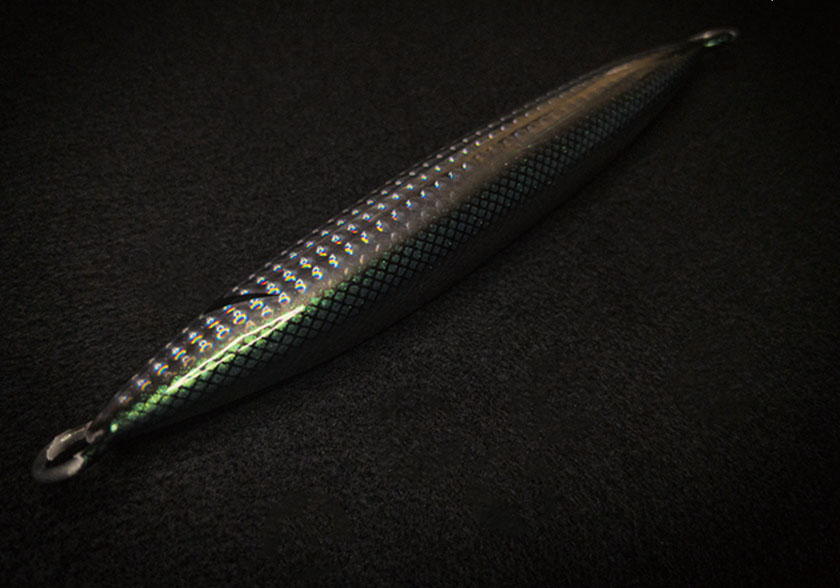
SILHOUETTE | Silhouette
Its near-circular cross-section reduces overall length and side area compared with jigs of the same weight, resulting in a relatively smaller silhouette.
This makes it easier to match size even when fish are feeding on compact bait, allowing you to approach with a lighter weight.
Its overall rounded shape lets water flow off easily, contributing to a roll-dominant action with reduced wobbling.
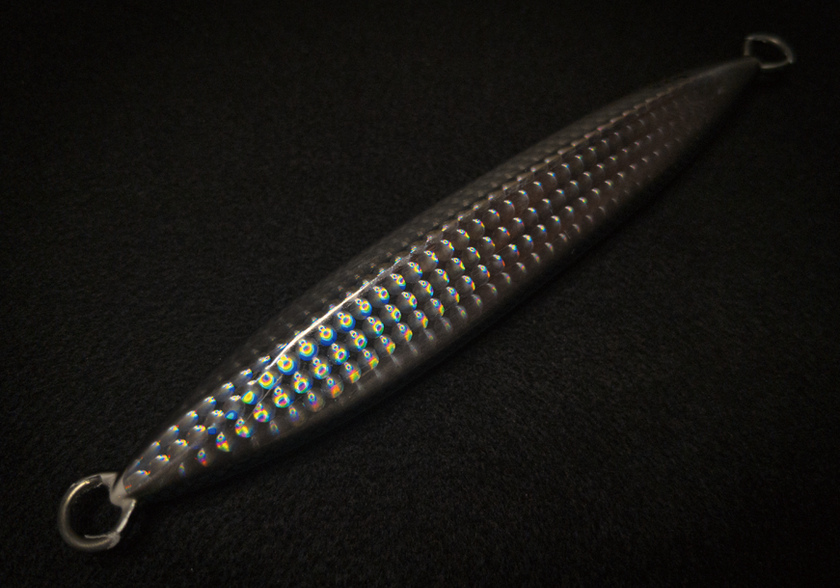
KEEL EDGE | Keel Edge
The underside of the body features an edge like the keel of a boat.
The defined keel edge engages the current during the fall, helping even subtle changes in flow initiate a change in the jig’s posture. On a steady retrieve, it also acts like a rudder to limit excessive tail wobble. Combining a body that sheds water with an edge that responds quickly to the flow produces responsive action with very little rod input.
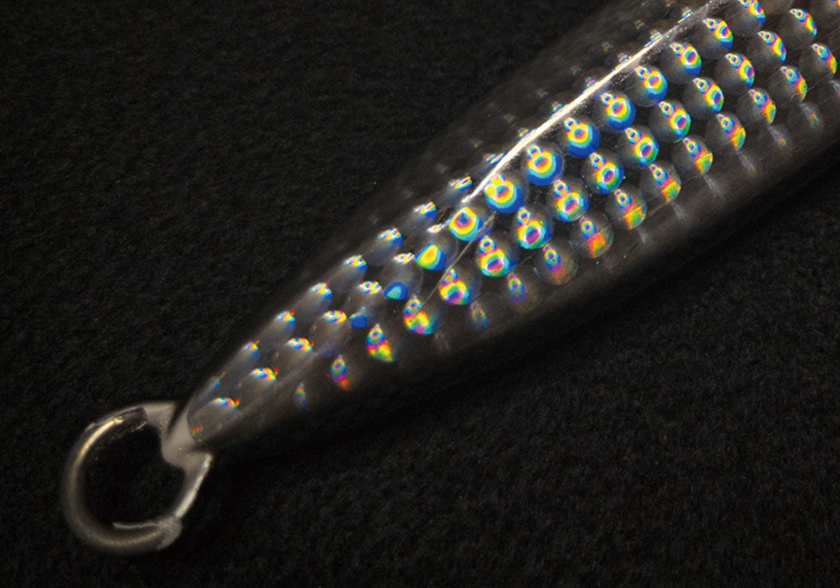
FRONT FLAT | Front Flat Surface
A flat surface at the front of the body is deliberately designed to catch water. During a jerk, water pressure on this surface acts as a brake, limiting forward travel and helping the jig change posture as soon as the rod input is released. The body sheds water while the front flat catches it; together, they create the transition from the jerk into the fall.