
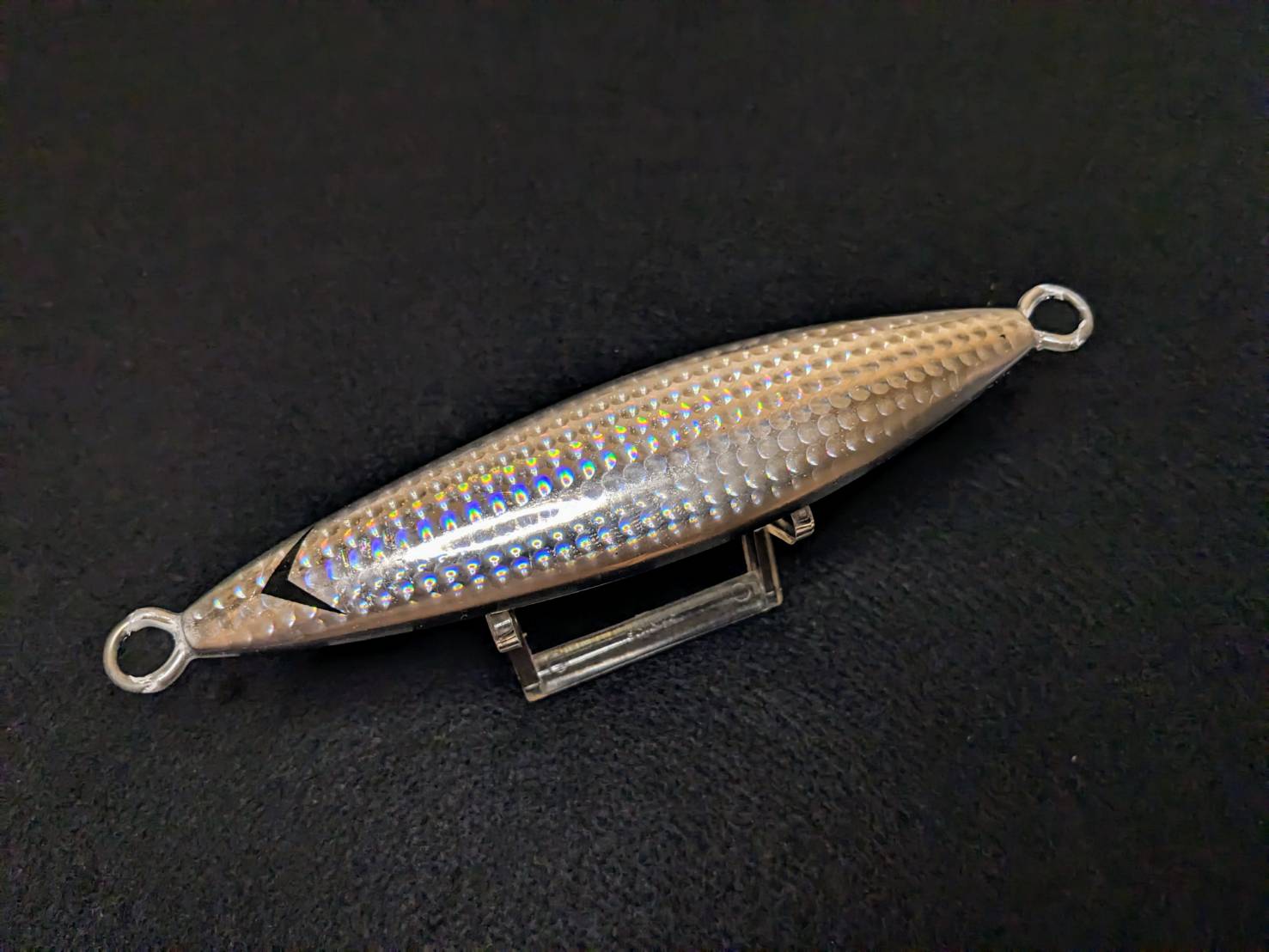
Retaining the original Edge Bait model’s hallmark horizontal fall with a fine, trembling vibration, Slow Lift takes that character and refines it into a slower fall by slightly flattening the body to increase the surface area that catches the water. Rather than simply thinning the body into a leaf shape, its defining feature is a deliberately retained thickness. While reducing fall speed compared with the original model, it does not catch as much water as a typical leaf-shaped jig, achieving an excellent balance of sinking speed and response.
Slow Lift excels at working a specific depth zone methodically, using the fall to draw strikes. The rear of the body narrows slightly and incorporates a recess. It performs particularly well when drifting with opposing wind and current, or in weak current where the jig can fall naturally. Even with the line close to vertical, repeated lifts and falls help the jig settle into a horizontal posture, making the fall itself part of the presentation. When fish are less active and struggle to follow a fast-falling jig, or when baitfish are concentrated in a narrow depth band and you want to keep the jig there longer, Slow Lift’s slow-fall action comes into its own.
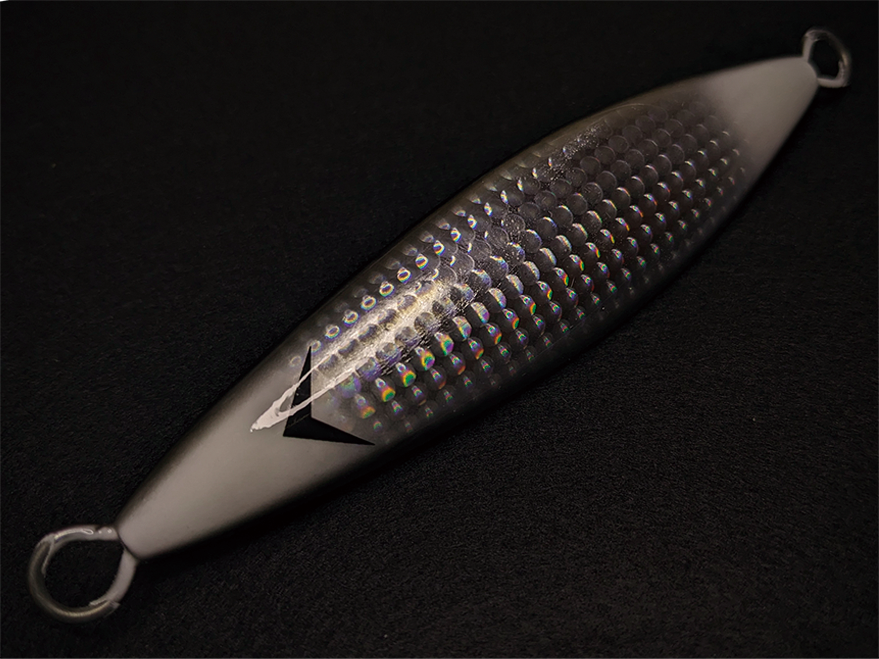
SILHOUETTE | Silhouette
By giving the body a moderate thickness, it achieves a compact silhouette with a shorter overall length than a conventional leaf-shaped jig of the same weight. While securing the water-catching area needed for a slower fall compared with the original, the design avoids making the silhouette unnecessarily large. Even when fish are feeding on small bait, it can handle the required depth and current without reducing weight.
“Same weight, smaller silhouette.”
This is Slow Lift’s unique body balance, positioned between a short jig and a leaf-shaped jig.
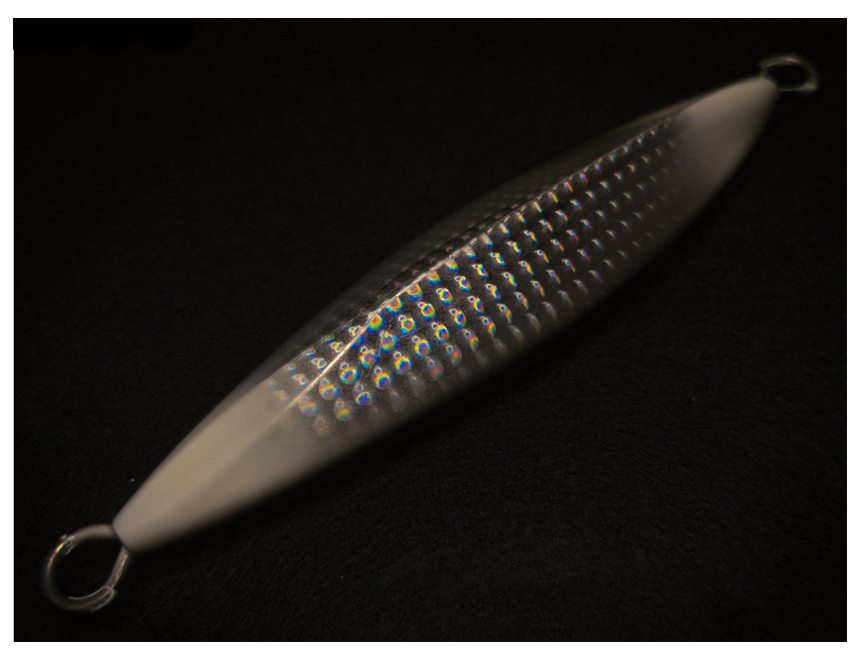
KEEL EDGE | Keel Edge
Like the original model, it features a keel shape on the bottom of the body.
While the flattened body catches water across a broad surface, the keel engages the flow along a narrow edge, helping the jig respond quickly as the fall begins.
The keel responds quickly to the flow as the fall begins or the jig changes posture. It keeps the action responsive despite the flatter body and helps produce the jig’s distinctive trembling fall.
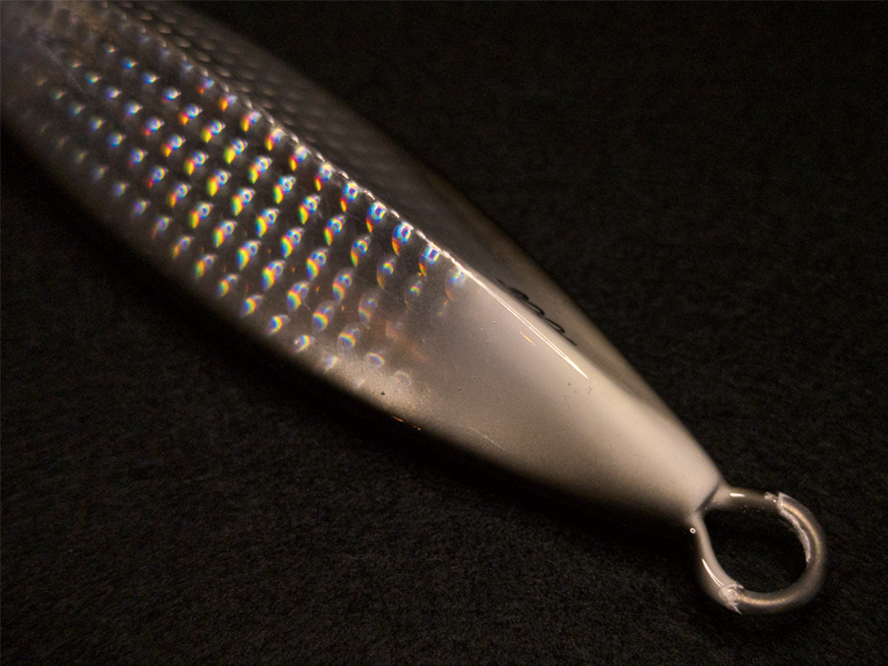
Rear Cup | Rear Cup
The rear cup catches water during the fall, creating parachute-like drag. By slowing the tail’s descent, it helps the jig settle into a horizontal posture and spend more time in the water column as it falls. This further enhances the flattened body’s slow-fall action.
This is a unique shape designed not simply to increase resistance, but to control fall speed and posture.