
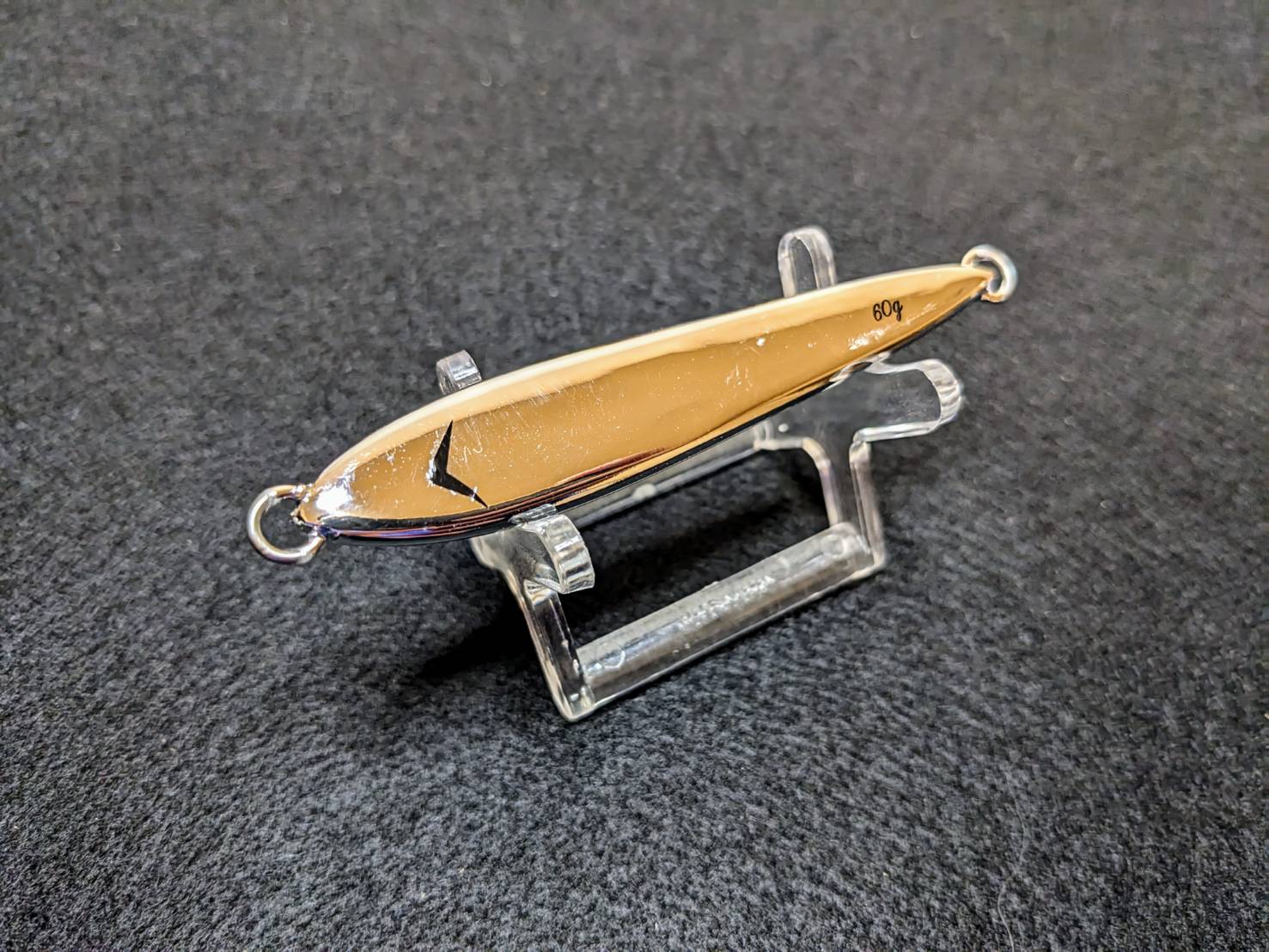
This front-balanced casting jig is designed to target fish feeding higher in the water column on sardines and whitebait. Its gently curved body produces a spoon-like wobble-and-roll action, with the tail tracing a figure-eight pattern rather than the typical wobble of a metal jig. A recess at the front catches water and creates an erratic darting action in response to subtle changes in flow.
A brief, sharp input through the reel or rod tip can make the jig spin, creating a sudden change in action to trigger a bite. The 40 g model rises quickly on the retrieve and was also designed with rocky-shore fishing for blackfin seabass and red sea bream in mind. I also think it could work well for yellowtail kingfish in early spring with heavier tackle, although I have been broken off several times and have yet to land one.
It also performs exceptionally well when casting for bonito. Adding a blade is effective when you want to reduce tail movement. A steady retrieve, from around one handle turn per second up to a fast retrieve, is the basic approach. Short, half-pitch jerks can also be effective for isaki. As a general rule, cast the jig out and work it with the line at an angle rather than directly below the boat.
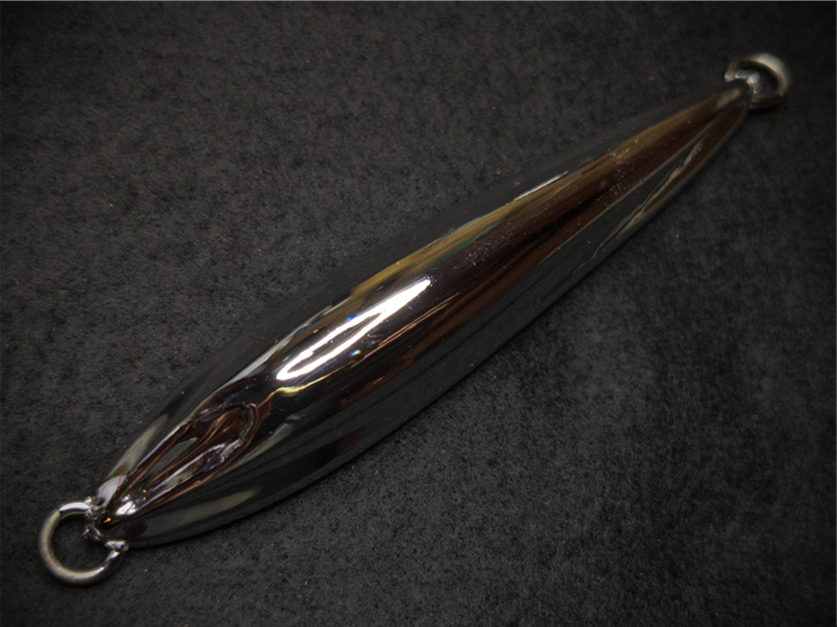
SILHOUETTE | Silhouette
A slim, compact silhouette designed with small bait such as whitebait and sardines in mind. Its key feature is a T-shaped body cross-section. By securing a broad water-contact area across the body despite the slender silhouette, it receives greater water resistance on the sink, reducing fall speed compared with standard metal jigs of the same size. This resistance also affects the retrieve range, preventing the lure from sinking too deep and making it easier to work sideways while keeping it in the upper part of the water column.
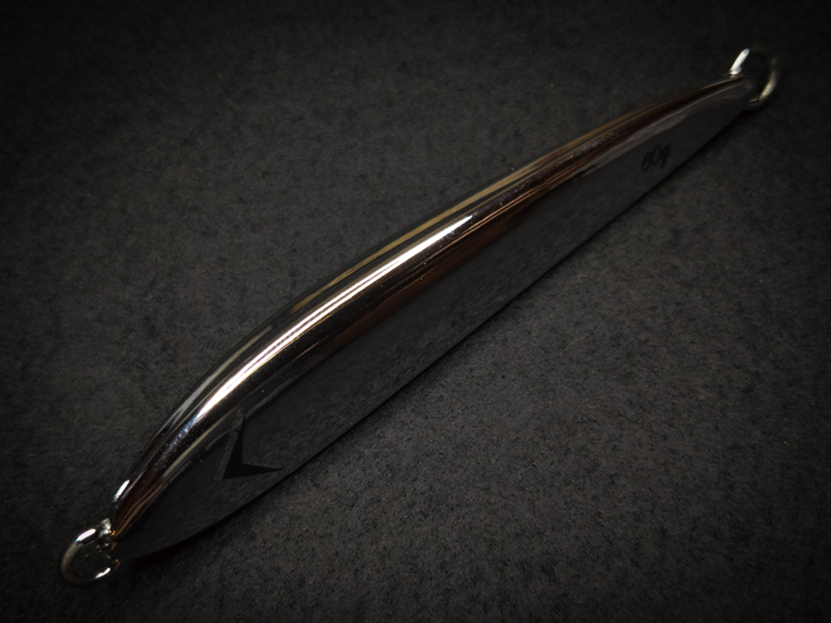
CURVED BODY | Curved Body
The body has a gentle curve along its length, similar to a traditional Japanese yumizuno lure.
Unlike a straight, symmetrical jig, the curved body deliberately creates an uneven flow of water around it. On the retrieve, water pressure tilts the body, which then rolls back in the opposite direction. This repeating movement produces a spoon-like, figure-eight wobble-and-roll action dominated by rolling.
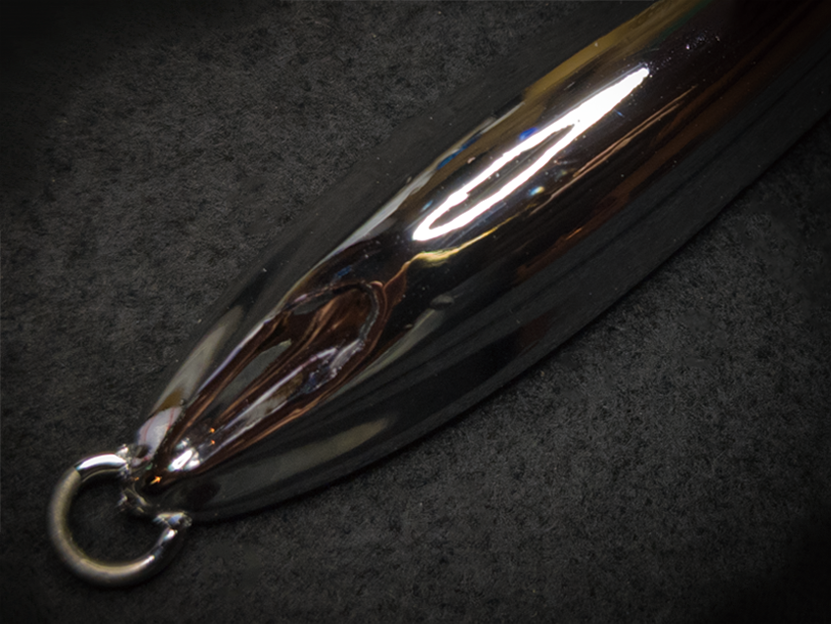
FRONT CUP | Front Cup
By catching water flowing in from the front during the retrieve, it creates resistance and quickly lifts the body as soon as winding begins. Combined with the T-shaped cross-section that reduces fall speed, it makes the lure easy to work in the upper range while suppressing sinking. The cup also catches not only steady flow but also subtle changes in water movement caused by tide or retrieve. As the balance of water pressure changes, it triggers irregular actions that momentarily deviate from the lure’s previous swim path.